


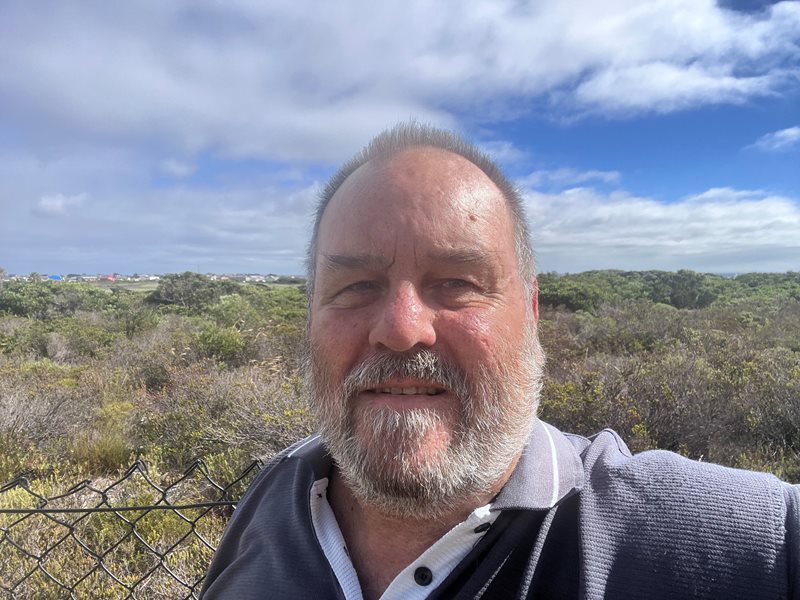
ENVIRONMENT NEWS - Dr Roger Parsons, an expert regarding the role that groundwater plays in sustaining Groenvlei, a unique freshwater lake just east of Sedgefield, wrote this article following an outcry about the approved abstraction of groundwater in the area for agricultural purposes. Read an article about these concerns here. In his article Parsons aims to lay these concerns to rest and ends his article saying the focus should rather be on the alien fish infestation in Groenvlei that poses a real danger to the vlei's health:
"I have followed recent newspaper discussions on concerns about the state of Groenvlei and the planned abstraction of groundwater to irrigate proposed avocado plantations.
The hydrology of Groenvlei has always been of interest to me since the 1990’s when I started working on groundwater issues in the area. In 2014 I was awarded a Ph.D degree for my research into the role of groundwater in partially sustaining Groenvlei.
For transparency, I have provided technical support to PG Bison and their hydrogeological consultant during the development, operation and monitoring of the so-called Fairview Wellfield. This letter is written as an entirely independent observation for benefit of public knowledge.
It is often a pity to spoil a good story with some facts, but the court of public opinion should at least take note of current scientific knowledge regarding the hydrology of Groenvlei – or disprove it.
The chief hydrological drivers of the system are direct rainfall onto (into) the wetland and evapotranspiration from the open water and ring of reeds around it.
Rainfall accounts for 72% of input into the system while evapotranspiration accounts for 83% of its water losses.
Groundwater contributes 28% of the inflow into the wetland and 17% of its losses through subsurface outflow along the southern side towards the coast. Streamflow – either in or out – does not play a role.
The significance of these findings is that it is improbable that groundwater abstraction could significantly impact the subsurface discharge into the wetland – unless a wellfield was specifically designed to prevent inflow.
Only 5% of the recharge in the upgradient catchment reports to the wetland.
I reviewed the measured pumping and groundwater level data during and after the wet-deck irrigation phase (2018 to end 2021) and found that the groundwater abstraction of some 4.5 ML/d had no impact on the water level of Groenvlei.
The current (new) water use license only allows 3.4 ML/d to be abstracted for irrigation, within the limits of historic abstraction.
What I did find during my research and review was that the water level of Groenvlei responded to rainfall. During wet periods the water level is high – reaching the maximum on record of 3.4 m above sea level after the good rains of the early 1980s.
High levels were also experienced in 2008 and 2015.
Low water levels of 2.2 m above mean sea level have been recorded at the Department of Water and Sanitation monitoring station in 1980, 1992, 2003 and between 2020 and 2023.
The water level recovered somewhat after the better rains of 2023 and 2024, but has already responded negatively to the poor rains of 2025.
Only 439 mm/a was measured during the course of the year.
The long-term average rainfall measured at Ruigtevlei between 1947 and present is 694 mm/a.
Since the good rains of 2015, the average rainfall between 2016 and 2022 amounted to 564 mm/a. During this time the water level fell from almost the highest on record to the lowest.
This drop in water level preceded the groundwater abstraction and showed no change when the abstraction stopped.
A positive groundwater hydraulic gradient towards Groenvlei existed pre-, during and post- the period of wellfield pumping (2018 to end 2021) – and has persisted since.
These data – and the measured groundwater level data - demonstrates that any relationship between the water level in Groenvlei and groundwater abstraction is coincidental rather than causative.
The wellfield has not been in production for the past four years since the partially burnt timber in wetdecks was removed.
Scientific monitoring has continued.
As there is nothing we can do to control rainfall, I would think that if we are really concerned about Groenvlei we should be looking at the ongoing impact of alien fish on the ecology of the wetland rather than expending energy on issues that have been scientifically shown not to have any significant negative impact."
Dr Roger Parsons
Pr.Sci.Nat (400163/88 Geological Science)
Honorary Member: Ground Water Division
05 January 2026
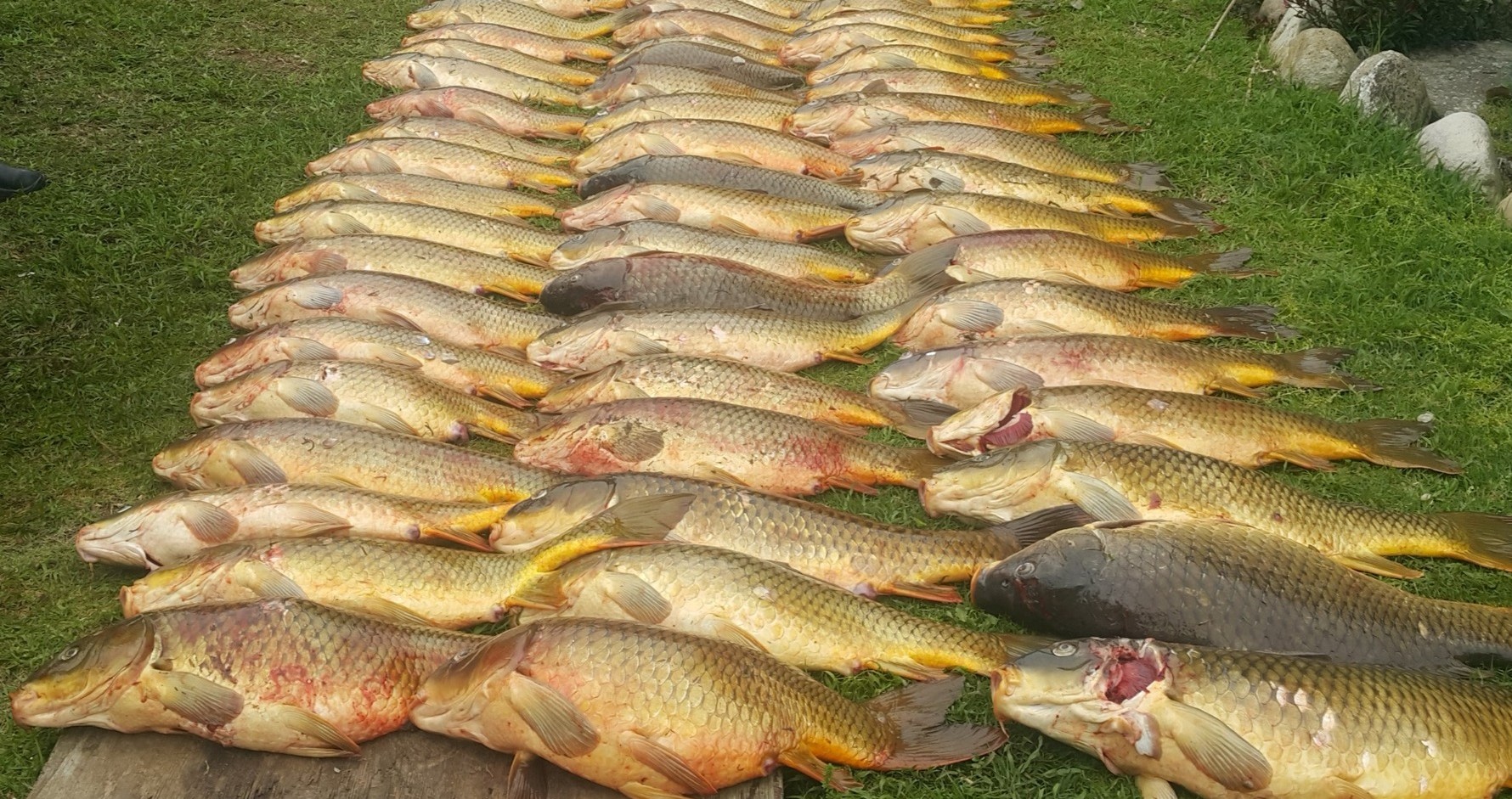 Alien fish in Groenvlei, like Carp that was introduced into the vlei in the 90s, is a massive problem. Photo: Invasive Fish Species Management Facebook page
‘We bring you the latest Garden Route, Hessequa, Karoo news’