


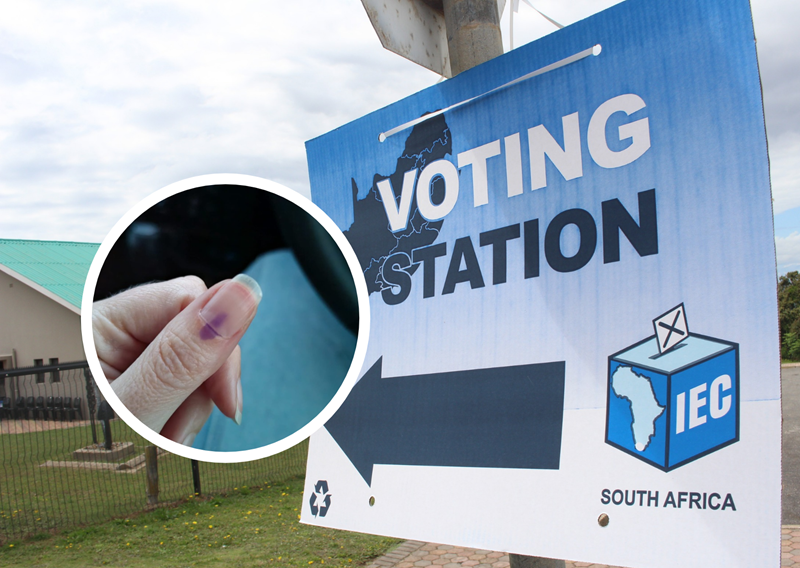
GARDEN ROUTE NEWS - With voting in the 2026 Local Government Elections officially concluded, the counting process is now under way.
From early this morning, 4 November, voters across the Southern Cape made their way to their respective voting stations to exercise their constitutional right and cast their votes.
While turnout and activity varied from one station to the next – with some queues snaking out into the streets, while others saw little to no queuing – the day appeared to pass without any major disruptions.
From Riversdale to Knysna, the Southern Cape experienced a largely smooth and peaceful voting day, with only a few minor hiccups reported, including late starts and technical glitches at certain stations. However, these appeared to do little to dampen the mood, with the general atmosphere at polling stations remaining jovial and peaceful throughout the day.
With voting now behind us, attention turns to the counting of ballots as the region awaits the outcome of the 2026 Local Government Elections.
But what exactly happens during the counting process?
According to the IEC's website, the process begins with all ballot boxes being accounted for before the sealed boxes are opened and their contents emptied.
Each ballot paper is then unfolded, face down, and checked for the Electoral Commission's security stamp. Only ballot papers bearing the official security stamp are considered valid and included in the count.
The valid ballot papers are then grouped according to colour and sorted into piles according to the votes cast for each political party and candidate.
Once sorted, the ballots are counted and arranged into bundles of 100, after which the votes for each party or candidate are tallied.
The results are then reconciled against the number of ballot papers received and the total number of ballots cast at that particular voting station.
“Results slips are signed by the counting officer, independent candidate agents and party agents. A copy of the results slip is posted on the door of each voting station,” the IEC explains.
The other copy is taken to the local Electoral Commission office, where it is scanned, captured and verified by independent external auditors.
At the results centres, party representatives and independent candidates are also able to monitor the process and raise objections should they suspect any irregularities, according to the IEC.
The final step is the announcement of the election results, thus bringing to an end the Local Government Elections 2026.
‘We bring you the latest Garden Route, Hessequa, Karoo news’