


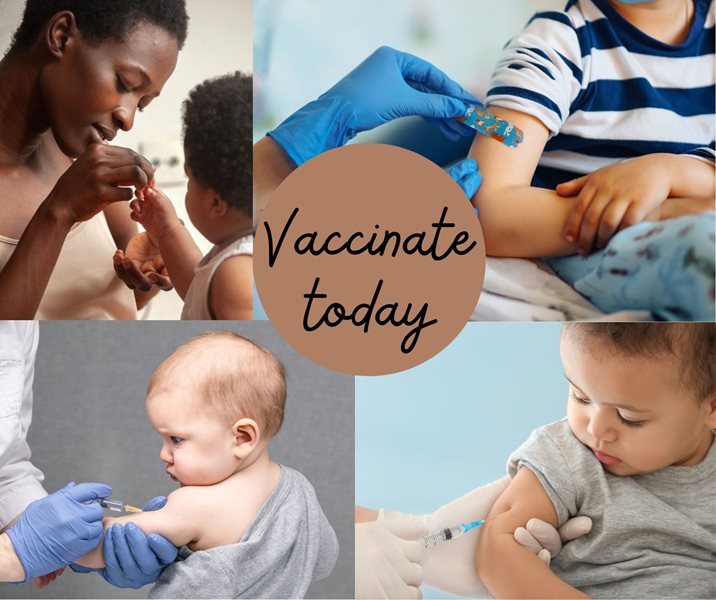
NATIONAL NEWS - South Africa’s declining childhood vaccination rates have triggered a public health emergency, with outbreaks of measles, rubella and other preventable diseases already spreading through several provinces, the Department of Health warned this week.
On Wednesday, 26 August, departmental spokesperson Foster Mohale said the situation had moved beyond a warning stage.
“The Department of Health would like to announce that far fewer babies and young children are getting their routine vaccines and outbreaks of diseases such as measles and rubella are already happening as a result,” Mohale said.
According to the department, the drop in immunisation coverage threatened to reverse the significant gains made in reducing infant and under-five mortality since the mid-2000s.
Unvaccinated infant numbers have tripled since 2017
The proportion of infants receiving no vaccinations at all has risen dramatically over the past decade.
“The number of children under one year who have received no vaccines at all has jumped from 12.1 % in 2017 to 36.3 % in early 2026, meaning more than one in three infants is completely unvaccinated and are at a risk of falling ill from diseases like measles and rubella,” Mohale said.
This effectively tripled the number of completely unvaccinated children in the country, leaving hundreds of thousands of infants exposed to potentially life-threatening illnesses, according to the department’s statement.
Routine coverage has also weakened broadly, not just among unvaccinated infants.
“Overall routine vaccination coverage has dropped sharply across all 52 districts in the country,” Mohale said.
He added that “the proportion of children getting the first dose vaccine fell from 87 % in 2021 to 67 % in 2025, while coverage for the 6-in-1 infant vaccine fell from 87 % to 60.5 % in the same period”.
Unless urgent interventions were implemented, the department said South Africa was unlikely to reach the World Health Organization’s target of 90% coverage for childhood immunisation.
Measles and rubella outbreaks already under way
The consequences of falling coverage were no longer theoretical, the department said, pointing to active outbreaks already recorded in multiple provinces.
“Therefore, when vaccination rates fall, diseases that were once rare are likely to re-emerge,” Mohale said.
He explained that “this is no longer just a warning because measles and rubella outbreaks are currently occurring in multiple provinces with most cases recorded among children between one and 14 years old”.
The outbreaks were significant in scale.
“Since January 2026, about 3,462 confirmed measles cases and almost 400 rubella cases have been recorded across the country, mostly in the Western Cape, Free State, KwaZulu-Natal, Northern Cape and other provinces,” Mohale said.
According to the department, 70.9% of the measles cases were recorded in children aged one to 14, a pattern directly linked to low immunisation coverage.
Rubella cases posed a particular danger to pregnant women, the department noted, due to the risk of Congenital Rubella Syndrome in unborn children.
Polio, diphtheria and whooping cough also detected
Beyond measles and rubella, the department’s written statement flagged several other concerning developments.Imported poliovirus strains had recently been detected in wastewater in Cape Town, even though South Africa has maintained its polio-free status since 2014, the statement said.
Sporadic cases of diphtheria, a serious bacterial infection that can obstruct breathing, had also been identified primarily in the Western Cape, pointing to gaps in booster coverage and disease surveillance, according to the department.
Cases of pertussis, or whooping cough, had emerged in several provinces as well, mostly affecting infants under six months who were too young to be fully vaccinated, a pattern the department said signalled a breakdown in herd immunity protecting the most vulnerable.
Falling coverage threatens long-term health and economic costs
Low vaccination coverage carried consequences beyond immediate illness, Mohale said.
“Low vaccination coverage puts children at higher risk of severe illness, long-term disability and deaths, and also threatens to undo decades of progress in reducing infant and under-5 deaths,” he added.
The department’s statement added that disease outbreaks could disrupt children’s early development through prolonged school absence, with knock-on effects for families who lose income when children fall ill or are excluded from school.
To reassure the public about vaccine safety, Mohale pointed to the country’s regulatory oversight.
“All vaccines used in South Africa are assessed and registered by the South African Health Products Regulatory Authority,” he said, referring to the body known as SAHPRA, which confirms their safety and effectiveness before use.
Department urges parents to bring children for catch-up vaccinations
The department called on parents and caregivers to act without delay.
“Therefore, if your child has missed any routine vaccines, please take them to the nearest clinic or healthcare provider for catch-up immunisation as soon as possible,” Mohale said.
He added that “communities and families are urged to act quickly because reaching the World Health Organisation’s targets of 90 % coverage by the country will require everyone, especially parents and caregivers, to bring their unvaccinated children for immunisation at the nearest health care facility.”
According to the department, it was prioritising an immediate, coordinated national response, including catch-up vaccination campaigns targeting children who had missed doses across all districts.
The public was urged to rely only on official government platforms for accurate immunisation information and to disregard unverified claims and misinformation circulating on social media.
‘We bring you the latest Garden Route, Hessequa, Karoo news’